













Spiritual healing is the work of releasing what you have been carrying and reconnecting with the part of you that was never damaged by it. It is not a treatment, and it does not require faith. It is a practice of attention, usually beginning in the body, that loosens the hold of old hurt and the beliefs built on top of it.
The term gets used loosely, so this page sets out what it actually means, what it can and cannot do, and how to begin.
What spiritual healing actually means
Three different things travel under this name, and conflating them is why the subject is confusing.
Faith healing asks a higher power to intervene and remove an illness. Energy healing works with the body’s felt energy, often through a practitioner. Spiritual healing, as the Ubunye Method uses the term, is neither. It is the practice of releasing emotional and mental weight so that your own sense of self becomes clear again. You do it yourself. Nothing is asked of you except attention.
The word healing is doing specific work here. It does not mean curing an illness. It means that something in you which had become knotted, defended or numb begins to move again.
Most people arrive carrying a version of the same thing: an event, a relationship, a period of their life that ended but never really finished. The event is over. What remains is the shape it left behind.

Spiritual healing is not religious
This is the first question most people have, and the answer is simple.
The Ubunye Method is not a religious practice, and nothing in it asks you to adopt a belief system. Ubunye is a Nguni word meaning oneness. The practice is about the relationship between your mind, your body and your sense of self, not about doctrine.
You can hold any faith, or none, and practise it without contradiction. People from every religious background and none use the same sessions. There is no conversion in it, because there is nothing to convert to.
Nothing is asked of you except attention.
Where the confusion comes from is the word spiritual, which in English carries religious freight it does not need to. Used here it points at something ordinary: the part of you that notices your thoughts rather than being them.
What people are usually trying to heal
In practice, almost everyone is working on the same few things.
Chapter 1 of the Method puts it directly: “Energetically we attach ourselves to our life story.” The story is the accumulated set of beliefs about who you are, formed mostly from things that happened to you. Some of it protects you. Some of it is long past useful and still running.
The Method continues: “most of us never rest and cannot step out of our ego or identity and are consumed by our story. We hold firmly onto the belief systems which protect us.” The aim is not to decide which beliefs are good or bad. It is, in the Method’s words, “to give up attachment and rigidness of the mind.”
What that looks like day to day is familiar enough:
- Tension you carry without being able to explain where it came from.
- Reacting harder than a situation deserves, then wondering why afterwards.
- A quiet sense that something is off, with nothing obviously wrong.
- Feeling at a slight distance from your own life, as though watching it.
- Patterns that keep repeating with different people in different years.
None of these are disorders. They are the ordinary residue of having lived, and they are what most people mean when they say they want to heal something.

How spiritual healing works in practice
The Method moves through four stages, in order. The order matters, because each one makes the next possible.

1. Release what you have been carrying
Most of what weighs on people is not the event itself but everything built on top of it: the meaning, the story, the belief that formed afterwards. Releasing is the work of setting that down, not of forgetting what happened.

2. Reconnect with who you are underneath
Once the weight comes off, something is left that was there the whole time. The Method calls this the higher self, and reaching it is less about acquiring anything than about removing what was in the way.

3. Work with the body, not just the mind
You cannot think your way out of something the body is holding. Tension, shallow breathing and bracing are where the mind’s work shows up physically, so the body is where a lot of the release actually happens.

4. Build something that lasts
A single session can lift a mood. What changes a life is the repetition: a steadier baseline, a shorter recovery from setbacks, and a way of meeting difficulty that does not put you back where you started.

A practice to begin with
A shortened version of Overcoming Fearful Thoughts, Part 4, from Chapter 1. It works with the movement the Method describes as going “from fear to love, from despondence to hope, from panic and doubt to optimism.”
- Settle. Sit or lie comfortably and close your eyes.
- Breathe. In for a count of three, out for a count of three. Four times.
- Open. In your inner voice, slowly: “I am open to changing my thoughts.” Then: “I am open to receiving love.” Then: “I am open to connecting with myself.”
- Rest. Four more slow breaths. Do not chase a feeling. Let the words sit.
- Affirm. Slowly, once each: “I am connected; I am one.” “I am whole; I am love.”
- Return. Bring your attention back to the breath, then to the room, and open your eyes.
The full guided version is in Chapter 1 of the app. If a phrase feels untrue when you say it, that is worth noticing rather than forcing. The Method is explicit that fear is not the enemy here: “fear is here to teach us. Fear is not bad in itself.”
What changes when it works
The Method works across four areas: the mental, the emotional, the physical and the spiritual. Change shows up in all four, and it can be substantial.
What moves, in the Method’s own term, is your state of being: the energetic state you are actually in rather than the one you would describe if asked. The sessions put the outcome of learning to move it in strong terms: “as you dive into understanding how to shift yourself from a negative state of being to a positive one, you can control your stress and, in a sense, become the master of your conscious reality.”
Early on, the most common report is not feeling better but noticing sooner. The gap between something happening and your reaction to it widens, and in that gap there is a choice that was not there before.
From there it goes further. Mentally, the loops quieten and the defences come down; the Method describes this part of the work as “breaking down our walls and transforming and finding our inner power.” Emotionally, you gain the ability to move your own state rather than being moved by it. Physically, held tension releases, breathing changes, and sleep usually settles before mood does. Spiritually, the sense of being separate from everything around you starts to give way, which is the recognition the whole practice points at.
The Method’s name for the settled end of this is flow, and it ties flow to alignment rather than to mood: “I flow when I am aligned; I am aligned when I flow.” Flow is not a good day. It is what becomes available once the tension you were holding stops taking up the room, described in the sessions as energy moving “freely without limitations, leaving you feeling light, almost weightless.”
You will have the tools and techniques to shift yourself out of negativity by doing the work.
These shifts are not always gradual. People do have large ones, sometimes inside a single session, where something held for years moves at once. The Method is built to make that possible rather than accidental, which is why the chapters run in order and why the earlier work settles the body before anything else is asked of it.
What it asks in return is the practice. The tools only do the work when they are used.
What spiritual healing cannot do
Being clear about this matters more than it might seem, because the field is full of claims that do not survive contact with a hard week.
- It cannot cure a physical illness, and no session should be used in place of medical care.
- It cannot treat a mental health condition. It can sit alongside treatment, not replace it.
- It cannot undo what happened to you. It works on what you are still carrying, which is a different thing.
- It cannot be rushed. Nothing here works on a deadline.
If you are dealing with something serious, please work with a professional alongside this rather than instead of one. Our safety notes set out who should approach this carefully, including anyone with a history of trauma, dissociation, psychosis or severe anxiety.
Common questions
Is spiritual healing religious?
No, and the Ubunye Method is not a religious practice. Nothing in it asks you to believe anything or to adopt a faith. People of every religion and none use the same sessions.
Is it the same as energy healing?
Not quite. Energy healing usually involves a practitioner working with your energy field. Spiritual healing as used here is something you do yourself, through guided attention. The Method does include energy work later on, but the starting point is your own awareness, not someone else’s hands.
Do I need to believe in anything for it to work?
No. You need to be willing to pay attention and to notice what you find. Belief is not a prerequisite, and treating it as one tends to get in the way.
How long does spiritual healing take?
There is no fixed answer, and anyone giving you one is guessing. Most people notice small changes within a few weeks of regular practice. Deeper shifts take longer and arrive less dramatically than expected, usually noticed in hindsight rather than in the moment.
Can I do this on my own?
Yes, and most people do. Guided sessions exist because being led removes the question of what to do next, which is the thing most beginners get stuck on. If what surfaces feels like more than you can hold on your own, that is the point to bring in a professional.

Where to begin
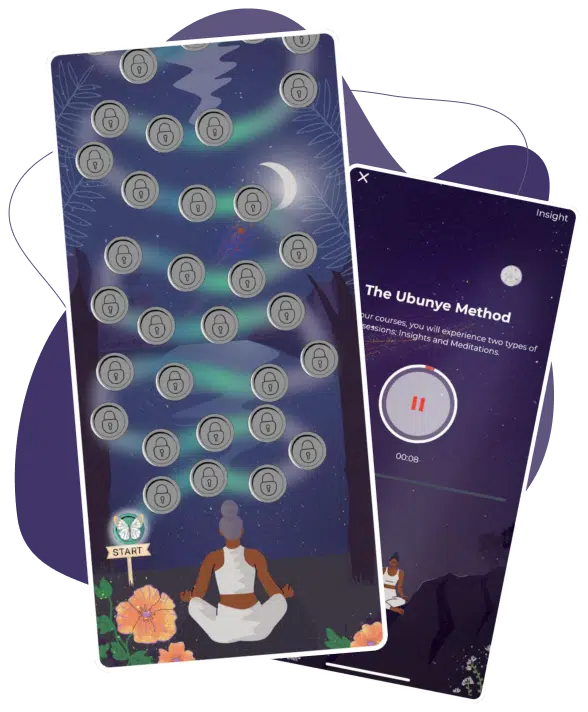
The first four sessions of the Ubunye Method are free and need no card. They start with the body and with settling, which is the steadiest ground to begin from. If you want the fuller picture of what the practice is built on, the Oneness Method explains it, and what spiritual awakening means covers the recognition this work tends to lead toward.
The Ubunye Method provides guided meditation for general wellbeing and personal development. It is not medical advice, diagnosis or treatment, and is not a substitute for professional healthcare. Read our full disclaimer.